Short Days, Long Memories: A Winter Wedding Car Guide for British Afternoons
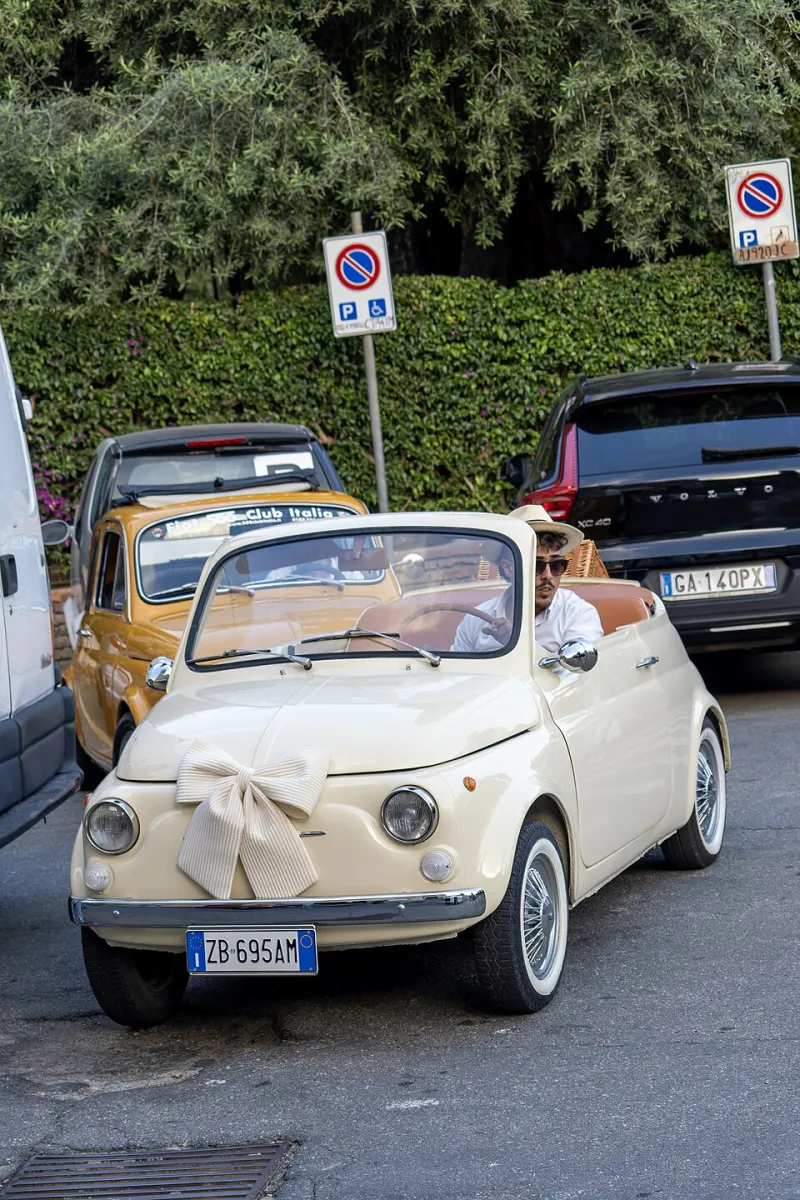
Photo: Bob Jenkin, CC BY 2.0, via Wikimedia Commons
There is a particular kind of British wedding afternoon that begins with a golden hour at 2.45 and ends with headlights sweeping a gravel drive at 4.15. Winter weddings are not a compromise; they are their own mood. But if you are marrying between November and February, the car stops being just a pretty arrival. It becomes a warm room on wheels, a photo studio with an engine, and a small logistics operation with a ribbon on the bonnet.
Begin with the sunset, not the spec sheet
Before you fall for a pale blue Bentley or a black Daimler, look up the actual sunset time for your date and venue. Not a vague idea that it gets dark around four. The real time. In much of the UK in December, the light is going by 3.45 and the useful glow is gone soon after. Work backwards from there.
If your ceremony is at 2pm, confetti at 3.15 and car departure at 3.45, you have a narrow window for daylight photographs with the car. Ask your photographer when they want the car in frame. Some couples do a first look or portraits before the ceremony precisely to catch the light. Others plan a short stop at a lit location, such as a hotel portico or a town hall, on the way to the reception. Tell your chauffeur the plan in advance. A good hire company will have done winter timings many times and will appreciate the honesty.
Build in a buffer even if the venue is ten minutes away. Ten minutes in summer is not ten minutes in fog, ice or a market town at rush hour.
Dark cars disappear; pale cars glow, then show the salt
At dusk, black and navy cars become silhouettes. The shape reads beautifully, especially a long bonnet or a curved wing, but the details vanish. If you love a dark car, ask your photographer to use the venue lights or the car's own headlights to pick out the chrome. It can be dramatic. It just needs a plan.
Cream, ivory, silver, champagne and light grey hold the last of the light and stand out against dark hedges, wet tarmac and stone churches. The trade-off is that pale paintwork shows road salt and grit. Ask the hire company how they handle winter cleaning between jobs. A quick wipe-down at the venue is normal, but check. A burgundy or deep green car under warm lamps is lovely too, and it hides a multitude of winter sins.
Think about the dress against the car, not just the car against the venue. A white dress against a black car is crisp and high contrast. Against a cream car it is softer and more tonal. Neither is wrong. Just know what you are choosing.
Headlights are part of the styling, not just safety
Ask your chauffeur to switch the headlights on for arrival and departure photographs. Many do this automatically in winter, but confirm it. Headlights can be used as a backlight or a rim light, especially on wet ground. They can also blind a photographer or flatten faces if pointed straight at the camera. The trick is angle. A car parked at 45 degrees to the camera, with the lights raking across the scene rather than into the lens, usually works.
Interior lighting matters too. Classic cars often have warm, dim bulbs that look lovely in photographs. Modern luxury saloons can have harsh LEDs. Ask if the interior lights can be dimmed or switched off. If you need fill light for a photograph inside the car, a phone torch covered with a white handkerchief gives a softer glow than a direct beam. If the car has puddle lights or illuminated sills, they are a nice detail for the arrival shots.
Do not leave the engine running with headlights on for long periods near guests. Fumes and noise spoil the moment. Position the car, switch off, and let the photographer work.
Warmth is a practical luxury
Ask the hire company to pre-heat the car fifteen minutes before it arrives. Check that the heater actually works. In a classic car, the heater may be optimistic at best. That is where blankets come in. Faux fur throws in cream or grey look good in photographs and feel kind on bare shoulders. Hot water bottles filled at the venue are a small, brilliant comfort. Hand warmers for the bride are useful too.
Avoid bulky coats that crush the dress. A cape, a shawl or a smart wool wrap is easier to remove in the car. Keep a clean, dry cotton sheet or white towel on the seat to protect the dress from any damp or dirt. Avoid plastic sheeting: it rustles, it sweats, and it looks like a crime scene in photographs. A cotton sheet is quieter and kinder.
Your chauffeur should carry a torch. Not a phone torch, ideally, but a proper one. They should walk the route from the car to the venue door before the bride gets out.
The dress, the grit and the dark puddle
In darkness, puddles hide. So do wet leaves on gravel and patches of ice on steps. A good chauffeur will walk ahead with a torch, hold an umbrella and offer an arm. A bridesmaid or the groom can carry the train. Check the hem before you go inside. Ask the venue if there is a covered portico or a dry mat at the door. If not, a white towel on the ground by the car door is a small thing that saves a lot of stress.
Do not let the romance of the moment rush the practical bits. The photographs can wait three minutes while someone checks the hem. They will be better for it.
Fog, ice and the long way round
Winter routes need more time. Fog on high ground, ice on shaded lanes, a gritter moving slowly, low sun in your eyes on a main road: all of these are normal. Add twenty to thirty minutes to every journey. Do a recce at the same time of day, not at midday. Check for road closures, floods and temporary lights. Ask your chauffeur about their winter experience. Most UK hire cars run on all-season tyres, but a careful driver who knows the lanes is worth more than a spec sheet.
If snow is forecast, have a backup plan. A closer hotel, a venue car, a change to the timings. Communicate early with the venue and photographer if you are running late. A stressed chauffeur is worse than a late one. Better to arrive early and sit in a warm car for ten minutes than to watch the clock and the fog at the same time.
Look after the guests in the dark
Guests will be standing outside waiting for confetti, often in thin shoes and no coats. Keep them inside until the car is positioned. Ask the venue coordinator to announce the exit. Have a plan for umbrellas: one between two guests is usually enough if they are close to the door. Confetti in headlights looks magical. Use biodegradable confetti and check the venue allows it. Sparklers need permission, space and a safe bucket, so do not assume.
A basket of blankets by the door is a lovely touch. So are lanterns or a lit doorway. They make the exit feel intentional rather than a dash to the car.
The romance of a dark afternoon
A winter wedding car is not just transport. It is a lit stage. The headlights on wet cobbles, the warm glow through a steamed window, the quiet inside while the wind works outside. Lean into it. Choose a car with character, brief your photographer, and let the dark do some of the work. Just do not forget the blankets, the buffer and the torch.
Book the car for the conditions, not the brochure. A good winter hire is less about gleaming paintwork and more about a chauffeur who knows where the ice sits and a heater that actually works. Then the short day feels like a gift, not a rush.