From Gravel Drives to City Kerbs: Matching Your Wedding Car to the Venue
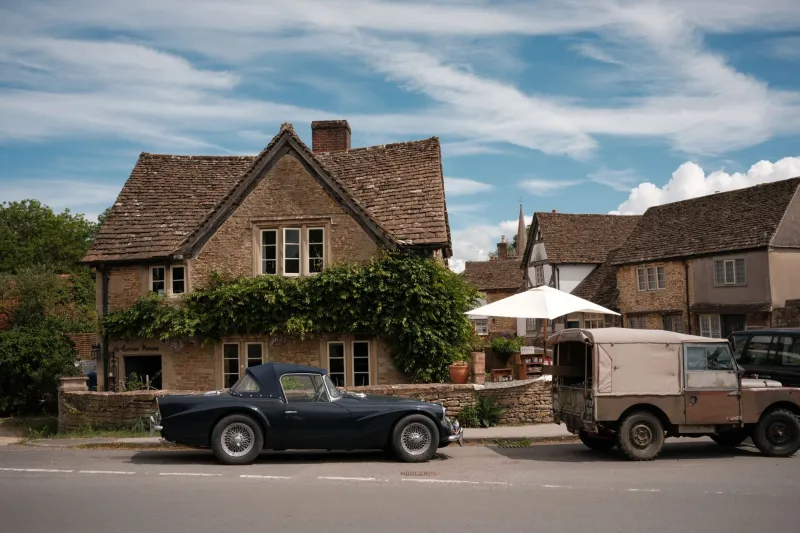
Photo: Y Coetsee, CC BY-SA 4.0, via Wikimedia Commons
UK wedding venues are wonderfully varied. You might be marrying in a medieval church, a city hotel, a marquee in a field or a country house at the end of a long gravel drive. The car has to work with all of it: the surface, the space, the photographs and the weather. Choosing a car that suits the venue is not just about looks—it is about whether it can get to the door, turn around and still look presentable when it does.
Start with the last 100 metres
The final stretch to the venue matters more than the motorway. Ask the venue about the surface: tarmac, gravel, grass, cobbles or mud. A low-slung classic car may struggle on a rough track, while a large luxury saloon can feel wide on a narrow lane. Check gate widths, turning circles and whether the car can drive right up to the entrance or needs to stop at a car park.
If the venue has a long driveway, ask whether there is a speed limit or a preferred route. Some stately homes ask cars to approach slowly to avoid dust or gravel spray. That is fine—just build it into your timings.
Country lanes and marquee fields
Rural venues are romantic, but they come with practicalities. Narrow lanes with hedgerows and passing places can be tight for a long wheelbase saloon. A classic car with good ground clearance and a modest turning circle may be easier. If the ceremony is in a marquee field, ask where cars can park and whether the ground is firm enough after rain. A wet autumn or a soggy spring can turn a grass car park into a challenge.
Styling should match the setting. For a barn or marquee, muted ribbons, foliage and natural textures work well. Avoid anything that will flap noisily in the wind or shed dye onto pale paintwork. If the lane is muddy, consider whether the car will be photographed before or after the drive—and warn your photographer about the surface.
City hotels and urban venues
City venues have their own rules. Kerbside space may be limited, double yellow lines may apply, and loading bays may be booked by the hotel. Ask the venue where the car should stop and whether there is a permit or a concierge who can help. If you are in London, check congestion and clean air zone charges; they can add to the cost of a longer hire.
Urban settings suit sleek luxury saloons and polished classic cars. Keep decorations minimal—a simple ribbon or a small posy can look more elegant than a full bouquet against a grand facade. Allow extra time for traffic, and ask the supplier whether they have driven to the venue before.
Gravel, cobbles and stately homes
Gravel drives are classic wedding car territory, but they can be dusty and loose. Ask the venue whether cars can stop at the front door or must use a side entrance. Cobbles can be uneven, so check whether the car has a comfortable ride and whether anyone in your party needs extra support. Stately homes often have photography restrictions, so confirm where the car can be photographed and whether drones or tripods are allowed.
Rain, wind and British weather
The UK weather is not something to ignore. Ask your car supplier about their wet-weather policy. Some classic cars are not used in heavy rain; others have hoods, heaters or covered transport. If rain is forecast, ask the venue about covered arrival points and whether there is somewhere to dry off. Pack towels, umbrellas and seat covers if allowed.
Wind can be just as tricky as rain. Long ribbons can whip against paintwork, so secure them properly or choose shorter bows. If you have a convertible, have a roof-up plan and a roof-down plan.
Questions to ask your venue before booking the car
- Where exactly can the car stop on arrival?
- What is the surface of the driveway and car park?
- Are there gate widths, height barriers or weight restrictions?
- Can the car wait on site for photographs?
- Are there noise restrictions or timing limits?
- Is there covered parking or a wet-weather alternative?
- Are decorations on vehicles allowed?
- Are there photography restrictions on the drive or at the entrance?
- Do you need a parking permit or access code?
Questions to ask the car supplier
- What are the vehicle's dimensions and ground clearance?
- Has the car been to this venue before?
- Is there a backup vehicle if something goes wrong?
- What is the wet-weather policy?
- Are ribbons and decorations included, and how are they attached?
- What happens if we run late?
Styling that works with the setting
A country house often suits cream, sage or soft blush ribbons. A city hotel can carry a deeper colour or a simple white bow. A coastal venue might call for blue and white, while a marquee field can take something brighter. The car itself should be the star; decorations should complement, not compete.
If you are using flowers, ask the supplier how they attach without damaging paint. Magnetic fixings are useful, but not every car has a magnetic body. A small posy on the door handle or a discreet ribbon on the bonnet can be enough.
Photography and timing
Talk to your photographer about the car's role. Do you want arriving shots, detail shots, or a portrait with the venue behind you? Build in time for the car to be positioned and for any decorations to be adjusted. If the venue has a long drive, a slow arrival can make a lovely sequence, but it needs to fit the schedule.
The bottom line
The best wedding car for your venue is the one that gets there comfortably, looks right in the photographs and does not create last-minute stress. Ask the practical questions early, match the styling to the setting, and keep a weather plan in your back pocket. Then the car can do what it does best: carry you into the day with a bit of style.