Where the Money Goes: Budgeting Honestly for a Wedding Car in 2026
Ask ten couples what they paid for their wedding car and you'll get ten very different answers — and about seven of them will be missing the detail that explains why. A £280 quote and a £1,100 quote can both be perfectly fair. They're just buying different things. Here's an honest look at what sits behind the numbers in 2026, and where the extra cash actually lands.
Before you compare a single figure
Most wedding vehicle hire is priced on four moving parts: the car, the chauffeur's time, the miles, and the date. Two quotes only become comparable once you've lined them up on all four. A cheap quote covering two hours and 20 miles looks very different next to a slightly pricier one covering six hours and 80 miles. Ask every supplier the same five questions: what time does the hire start and finish, how many miles are included, what's the charge for going over, is VAT in that figure, and what happens if the ceremony runs late?
The £250–£350 band: character over chrome
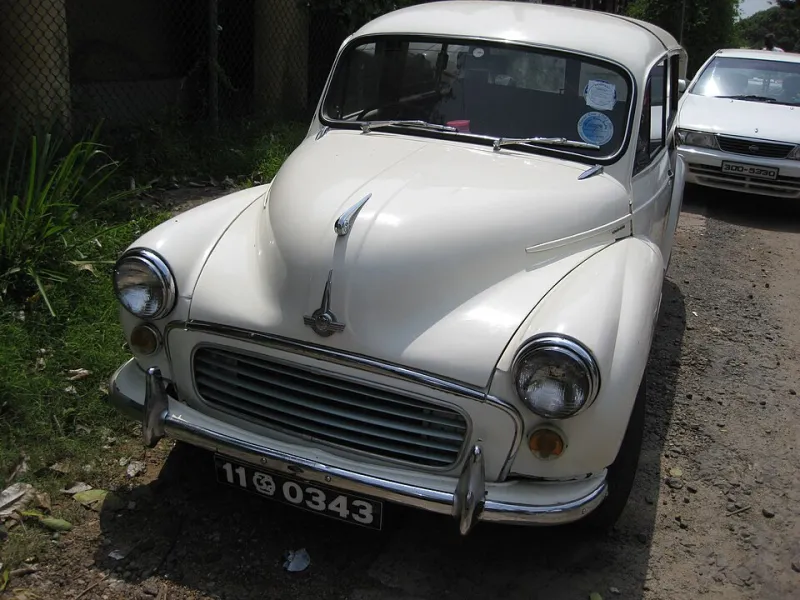
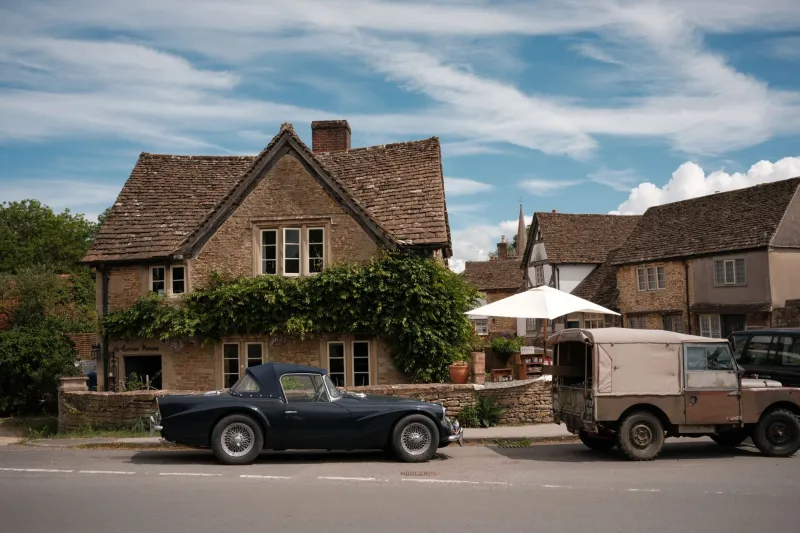
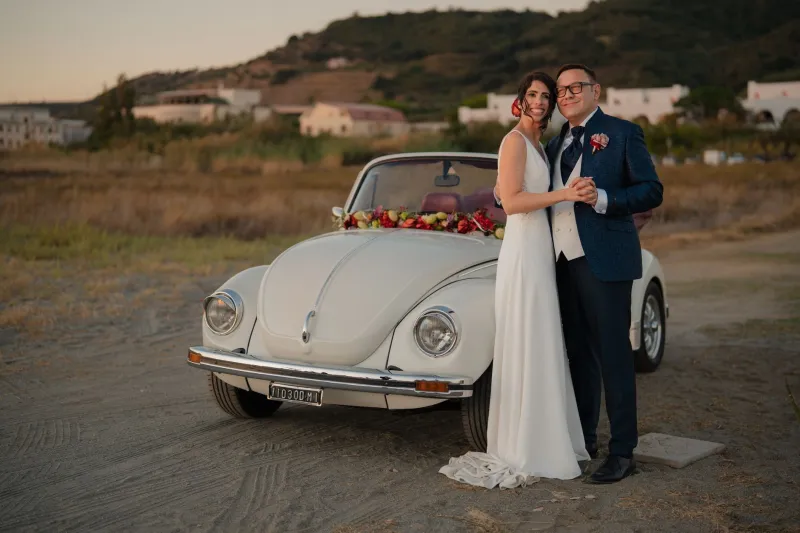
At this end you're generally looking at owner-drivers and small local fleets — a beautifully kept Morris Minor, an MGB GT, a splitting-window Beetle, a camper van with bunting, or a Beauford replica that looks a lot grander than its price tag. Expect a single car, two to three hours of chauffeur time, ribbons included, no fresh flowers, and a sensible radius of 15–25 miles from base.
You'll rarely get a red carpet, an umbrella attendant, or a second vehicle at this level. Self-drive classic hire also lives here, though the numbers work differently: you'll typically need to be 25 or over with a clean licence, and a chunky card hold covers the insurance excess.
Who it suits: registry office ceremonies, a short hop to the village church, a second car to ferry bridesmaids, or couples who'd rather spend the money on the band. It's also the bracket where personality beats prestige — a vintage camper with a hand-painted sign will photograph far better than a tired stretched limo.
Watch for: a travel surcharge kicking in beyond 15 miles, an extra-hour rate of £40–£60, and the fact that a driver doubling as photographer is a bonus, not a promise.
The £450–£700 band: the comfortable middle
This is where most UK couples land, and it's usually the best value in the market. Think Jaguar XJ or Daimler, Rolls-Royce Silver Shadow or Spirit, Bentley Arnage, a well-presented Mercedes S-Class, or a two-car package with a separate bridesmaids' vehicle.
Expect four to six hours of chauffeur time, 40–80 miles included, ribbons plus a modest bloom arrangement, a red carpet, an umbrella, bottled water, and a proper photo stop on the way to the reception. The chauffeur will usually have done your venue before — which is worth more than it sounds.
One honest caveat: older prestige cars are gorgeous and occasionally warm. A Silver Shadow on a 28-degree July afternoon is a beautiful way to arrive slightly pink-faced. Ask whether the air conditioning is genuinely up to a summer wedding, and whether there's a backup vehicle on standby.
£900–£1,400 and upwards: the grand gesture
Premium hire buys you three things: a rarer car, a longer clock, and a calmer day. Modern Phantoms and Ghosts, 1930s Rolls-Royces, Flying Spurs and freshly restored vintage saloons sit here, usually with eight to ten hours of coverage, 100-plus miles, bespoke styling matched to your colour palette, and a second chauffeur running the bridesmaids or the groom's party.
The real luxury isn't leather. It's not watching the clock. All-day coverage means the car waits through the ceremony, takes you to the photo location, comes back for the couple's exit, and doesn't disappear mid-speeches. For a multi-venue day — church, country house, evening do — that continuity is genuinely worth the money.
The extras that quietly push the bill up
None of these are cons; they're just rarely in the headline price.
- Travel and mileage. Beyond the included radius, expect £1.50–£3 per mile, each way.
- Extra hours. Typically £50–£120, and usually cheaper to book in advance than on the day.
- VAT. Often quoted ex-VAT to look keener. Always ask.
- Clean air and congestion charges. Real costs in London, Birmingham, Bristol and Bath — and they're the client's in most contracts.
- Date premiums. Saturdays in June, August and December carry a loading; Sundays and Bank Holidays sometimes do too. Midweek and November weddings can be 10–20% cheaper for identical service.
- Cleaning charges. Confetti in the vents, glitter on the seats, mud on the running boards. Some contracts allow £50–£150 for this.
- Deposits and cancellation. A 20–25% non-refundable deposit is standard, with the balance due around 28 days before. Read the cancellation clause properly — illness happens.
Where to spend, where to save
Spend on: a proper time buffer (an extra hour costs far less than the panic of a late arrival), a second car if you have more than four bridesmaids, and all-day coverage if you're moving between three locations.
Save on: champagne in the car (many operators can't serve alcohol under licensing rules anyway), elaborate floral styling when a colour-matched ribbon will do, and the stretch limo nobody will remember in ten years.
A last note on timing: the 2026 diary is already filling for peak Saturdays. If you want a specific car on a specific date, nine to twelve months ahead is the realistic window — and the best value is often the one booked early enough to avoid the scramble.