Three Seats, Two Families: Untangling the Wedding Car Guest List
Nobody warns you that the seating plan for the wedding car can be more delicate than the one for the reception. Table plans involve place cards and a spreadsheet. Car plans involve your dad, your stepdad, your grandmother's hip and a vehicle with, realistically, four usable seats. Get it right and the morning feels calm and generous. Get it wrong and somebody spends the drive to church staring out of the window.
The Traditional Layout, and Why It Rarely Fits
The received wisdom is simple: the bride travels with her father, the groom travels with his best man, and everyone else makes their own way. That works beautifully for a certain kind of wedding. It quietly fails for a great many others — the bride whose father died, the couple who are getting ready at the same hotel, the two brides, the groom with a mother he would very much like beside him.
Start from the question 'who would I be sad not to sit next to on the way?' rather than 'what does the etiquette book say'. The etiquette book has never met your family.
Who Actually Travels With Whom
A useful rule: one person who is emotionally significant, one person who is practically useful, and space to breathe.
For the bride, that is often a parent or a sibling, plus whoever is managing the dress, the train and the last-minute text messages. For the groom, it might be a best man, a brother, or a parent. The important thing is that the person in the car is not the person who will make you more nervous. If a well-meaning relative is prone to last-minute questions about the seating plan, they can travel separately and ask them at the reception.
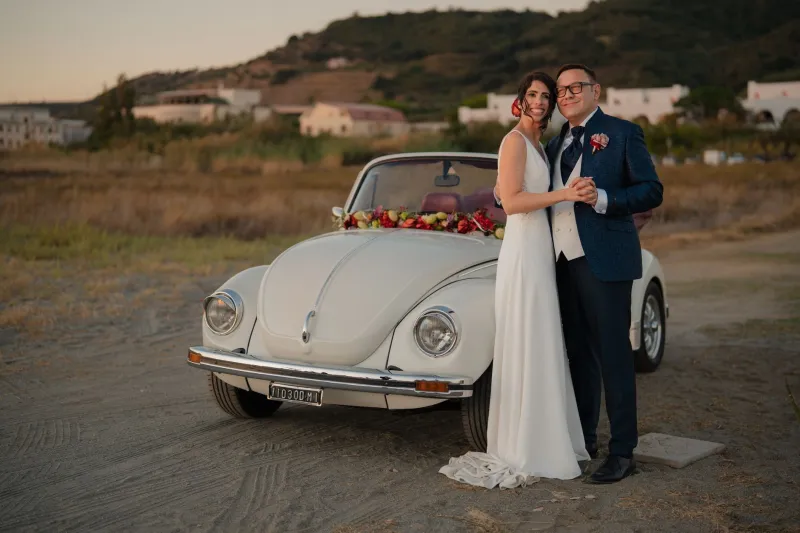
Consider too the quiet option: the bride travelling alone. Some couples find the ten minutes in the back of a classic saloon, with music and a chauffeur who knows when not to talk, the calmest part of the day. It is not a snub to anyone. It is a decision, and it is allowed.
The Grandparent Factor
The single most common reason couples upgrade to a larger car or add a second vehicle is a grandparent. Grandparents are the best people at weddings and the least compatible with a low-slung vintage coupé with a two-foot step up.
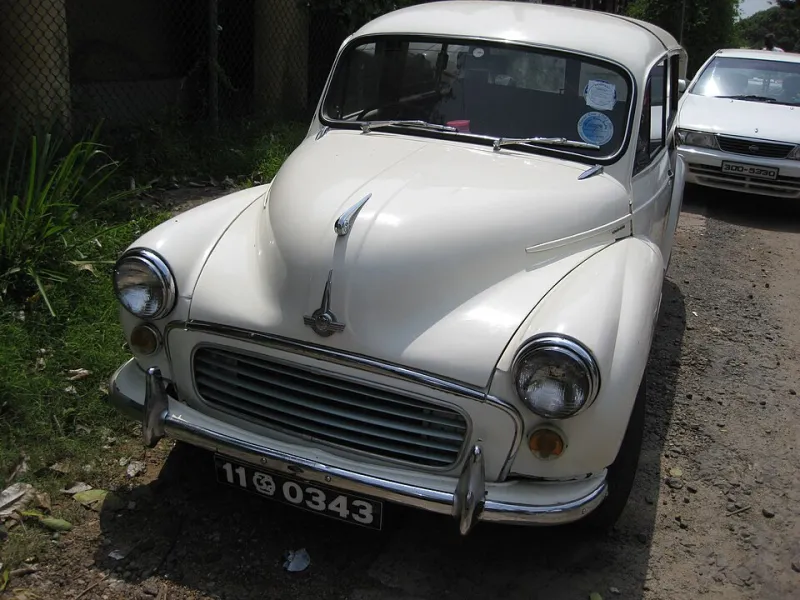
If grandparents are travelling, be honest about three things: the step height, the seat height and the distance from the car to the door. A beautiful 1930s saloon might be impractical for anyone with a hip replacement, and no amount of nostalgia changes that. Tell the hire company what is needed — they hear this all the time and will often suggest a specific vehicle, or a car with a running board and grab handles.
Ask about wheelchairs and walking frames in advance, not on the day. Will they fit in the boot? Can they be left at the ceremony venue and collected later? Does the vehicle have a large enough door aperture for someone to be helped in without contortion?
A thoughtful touch many couples miss: send the grandparents in the nicest car and travel in something plainer. They will be comfortable, they will feel honoured, and you will have one less anxiety between the hotel and the aisle.
Blended Families and Divorced Parents
This is where a second car stops being an indulgence and becomes a kindness. If your parents are separated and not comfortable sharing a journey, do not force them into the back of a Bentley together to prove a point. Two cars, or one car plus a pre-booked taxi for the other parent, costs a fraction of the catering per head and removes a genuine source of morning stress.
It is also perfectly acceptable for a step-parent to travel in the main car and a biological parent to follow in the second. The wedding is a public ceremony; the car is a private five minutes. Anyone who minds can be gently reminded of this.
Be explicit when you invite people into the car. 'We would love you to travel with Mum to the church' is much clearer than assuming the message will find its way through the family grapevine, which it rarely does.
A Simple Seating Template
Sketch it out like this before you speak to any hire company:
- Car one, outbound: bride plus one companion, plus anyone needed for the dress.
- Car one, return or reposition: whichever parent or grandparent would most appreciate the ride.
- Car two: grandparents or a parent travelling separately, plus a mobile number for the chauffeur.
- Guest transport: a minibus or taxis for everyone else, arranged with the same firm if they offer it.
Write down the names, not just the roles. 'Mother of the bride' means two different people in a blended family, and chauffeurs work from names on a sheet, not assumptions.
Etiquette Bits Nobody Says Out Loud
Who sits where in the back matters to some people and not at all to others; the near-side rear seat is traditionally the senior one. If you are unsure, let the older or more honoured guest take it. The front passenger seat is often overlooked and can be the nicest place in the car — offer it to whoever would enjoy chatting to the chauffeur.
Don't forget the person nobody assigned: the friend holding the bouquet, the cousin with the rings, the usher who has been running errands since seven in the morning. Sometimes the kindest gesture is offering them a lift back to the hotel in the good car.
Questions to Ask the Hire Company
How many passengers does the car comfortably seat, and how many honestly? Is there a step or running board? Can the chauffeur assist a passenger with limited mobility? Is there room in the boot for a folded walking frame? Can the car do two separate journeys, and what does that add to the price? And finally — what is the cancellation or amendment policy if the family arrangements shift?
Ask early. Seating decisions made in the final fortnight, in a group chat, with three people typing at once, are how arguments start. Settle it in the spring, write it down, tell everyone, and then enjoy the drive.